


Blog
The Power of Colour: Creating Spaces That Start Conversations

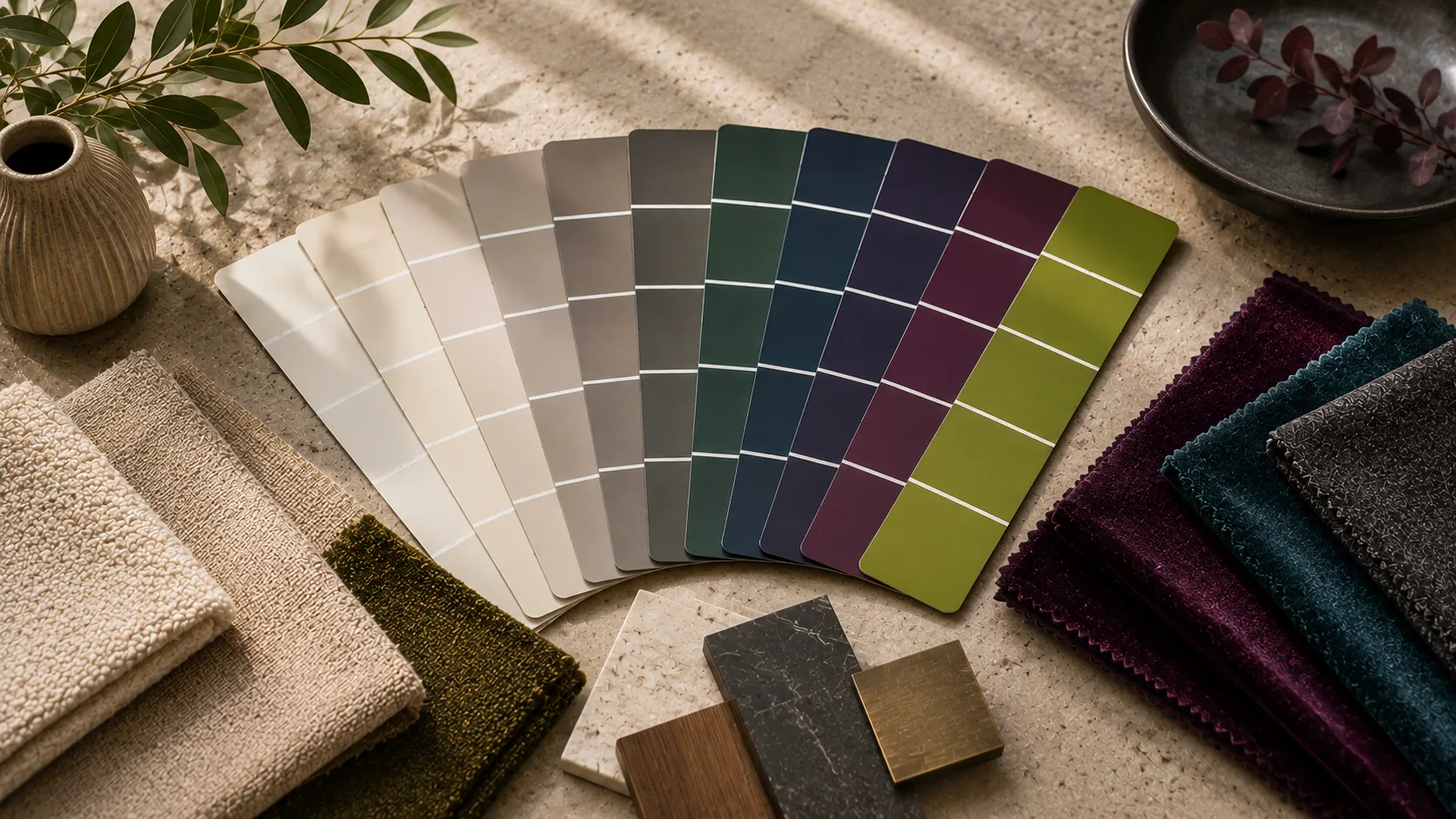
Colour wields power. Colour creates an identity.
In the process of designing someone’s space, there is a lot to take into consideration when choosing a colour scheme. It is not simply about what looks good. The colours we choose can influence how a space feels, what draws our attention and, ultimately, the identity we give to a room.
Today, creams, whites and other neutral tones are popular. They offer that clean, minimal look that suits every style; they also give you something else: a blank canvas.
Against a neutral backdrop, you have the freedom to decide where you want to draw the eye. Colour can come through an accent wall, artwork, décor, scatter cushions, curtains or even one piece of furniture. You do not necessarily have to commit to a room full of colour to make an impact.
Colour can make a bold statement, or simply flirt with the idea of something new, something different.
But Who Decides Which Colours We Want?
As we talk about colour and the colours that become popular in our spaces, it is worth asking: who creates these colours? Who decides which colours become the colours of the moment?
We are constantly introduced to new colour trends through fashion, furniture, interiors, emotional moods, those in our spaces and the brands around us. But a trending colour does not automatically make it the right colour for your space.
One of the ideas that came through during the Design Dialogue was that colour has to resonate with the customer. The environment matters. Personal preference matters. And how someone wants to feel in their space matters.
This is where the role of an interior designer becomes particularly interesting. It is not simply about following a colour trend, but understanding when to introduce colour, how much of it to use and, perhaps most importantly, whether it feels right for the person you are designing for.
Going a Little Deeper
While creams and whites may feel like the safer choice, there is something to be said for going deeper with colour.
During the conversation, interior designers shared some of the colours they had introduced into different projects: aubergine, teal, deep purple and gunmetal grey.
These are not necessarily colours that everyone would immediately imagine using in their space. And perhaps that is part of the colour appeal.
A deep colour can anchor a room. It can create contrast against a neutral palette or become the element that people remember when they leave. In one of the examples discussed during the dialogue, the intention behind the colour choice was exactly that: to make people stop, notice and start a conversation.
And being bold with colour does not have to mean making a permanent decision.
A scatter cushion can change. Artwork can move. A décor piece can be replaced. These smaller additions give us room to experiment with colours we may not be ready to commit to across an entire room.
Finding Your Colour
There is power in colour, but perhaps that power comes from what we choose to do with it.
For one person, the right space may be layered in creams and whites, with colour appearing only through a piece of artwork. For another, it may be an aubergine chair sitting unapologetically in the middle of the room.
Neither approach is necessarily more interesting or more current than the other.
What matters is that the colour feels considered, works within the space and, most importantly, resonates with the person who has to live with it.
Because sometimes colour whispers. Sometimes it starts a conversation. And sometimes, it becomes the identity of the room.

No account yet?
Create an AccountSubscribe now to keep reading and get access to the full archive.